
Books Set in Snowy Places
This topic was originally suggested as a Top Ten Tuesday post, but I missed it due to travel and family commitments. (Top Ten Tuesday is a weekly feature/meme now hosted by That Artsy Reader Girl.) I liked the topic idea, though, so I decided to go ahead with it anyway. Some of the books and descriptions found in this post appeared years ago, in various winter-themed posts on this blog.
Title links take you either to the book’s Goodreads page or to my review on the blog.
Books for Children


In First Snow, written and beautifully illustrated by Kim Lewis, a sheepfarmer’s wife and young daughter climb the hill to feed the sheep. As the season’s first snow begins to fall, Sara is excited, but drops her teddy in their hurry to get home. What has become of him? What makes this book so wonderful are the illustrations, which lovingly and realistically depict a farm and family in England’s Northumberland. (If you enjoy this book, you should also check out Lewis’s Floss, about a border collie.) [This book is out of print in the U.S.]
The Snow Lambs, by Debi Gliori, is also about a sheepfarming family. In this charming tale, Sam, his Dad, and their dogs round up the sheep as the snow begins to fall. But when the sheep are safely in the barn, Sam’s sheepdog Bess is nowhere to be found. Distraught, Sam gets ready for bed; side-by-side illustrations show Sam bathing and putting on his pajamas as Bess searches for and finds a missing ewe. A power outage, a raging stream, a downed tree, and Bess’s courage and tenacity combine to bring about a happy ending. [This book is out of print in the U.S.]
One of Robin’s favorite winter tales was Owl Moon, the 1988 Caldecott winner, in which a father takes his daughter “owling” on a cold winter’s night. Jane Yolen’s prose and John Schoenherr’s illustrations perfectly capture the magic of walking through snowy fields and woods in the moonlight, listening and watching for owls.
Ezra Jack Keats The Snowy Day, winner of the 1963 Caldecott Award, is the quintessential picture book for a snowy day. Illustrated mainly with paper cutouts, the spare text describes Peter’s adventures in an urban snowscape. It was a childhood favorite of mine, and it hasn’t lost any of its magic.
Snow Treasure, by Marie McSwigan, recounts how the children of a Norwegian village aid in smuggling some of the country’s gold reserves out of Nazi-occupied Norway. Hiding the gold bars, until now hidden in a snow cave, on their sleds, the children descend the mountain to a ship hidden in a narrow fjord, passing a Nazi encampment on their way. Though at least apocryphal and probably completely fictional, it remains a stirring and empowering story of courage and patriotism. In the years when I was teaching, I read this to my third grade classes, who invariably loved it.
In The Children of Green Knowe (L. M. Boston), Tolly spends the Christmas holiday with his great-grandmother at her ancient manor, Green Knowe. There she tells him tales of the children who lived there centuries before: Toby, Alexander, and little Linnet. Interwoven with the stories are Granny and Tolly’s Christmas preparations and Tolly’s own experiences with the children, who playfully tease and tantalize him until they finally appear. Though technically ghosts, the children are delightful and not at all frightening to either Tolly or the reader. Suspense comes as Tolly learns more about the curse said to have been placed on a topiary Noah (the Green Noah from which the house takes its name) and reaches its peak on a stormy night. This is the first of six books set at Green Knowe, and it remains my favorite for its perfect blending of fantasy and reality.
The Lion, the Witch, and the Wardrobe, by C. S. Lewis. The Pevensey children are evacuated from war-time London to stay in an old manor. Whilst playing hide-and-seek, Lucy goes through the back of a wardrobe into a magical, wintery land full of talking beasts and mythic creatures. When her siblings eventually join her, they discover that Narnia is held in eternal winter by the White Witch…and they are destined to break the spell. This first book in Lewis’s Chronicles of Narnia series is a classic, and deservedly so.
Books for adults
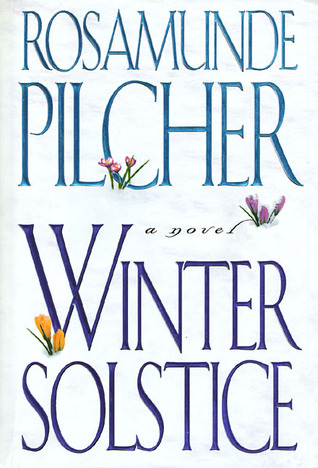


Winter Solstice, by Rosamunde Pilcher. Over half of this lovely book takes place in Scotland in the days leading up to Christmas, as a disparate group of people find refuge and the hope of a new beginning in an old house. Found family and themes of healing and comfort make Winter Solstice a perennial holiday favorite of mine.
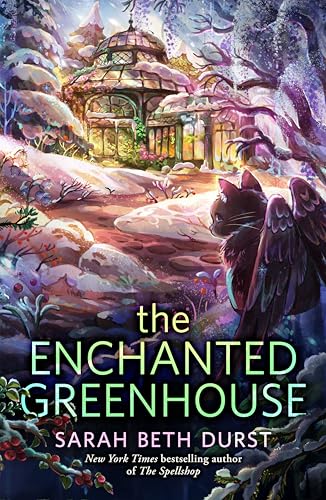
The Enchanted Greenhouse, by Sarah Beth Durst. Terlu awakes from her imprisonment as a wooden statue to find herself on a snowy, wintry island full of magical greenhouses, kept by a solitary, grumpy gardener. But the greenhouses are failing, and one person alone won’t be enough to save them. Where are all the people who used to live in the abandoned cottages? What happened to the sorcerer who built the greenhouses? And how can Terlu possibly hope to save the greenhouses and bring healing to the island…and its gardener?
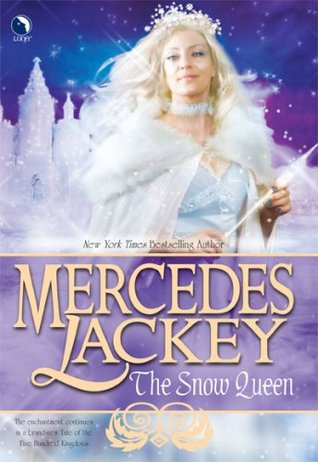
The Snow Queen, by Mercedes Lackey. In the Five Hundred Kingdoms, the Tradition, an impersonal, immensely powerful magical force, compels people into Traditional (i.e., fairytale or folk ballad) paths: Cinderella, Rapunzel/Ladderlocks, Sleeping Beauty, and so on. Aleksia is a Godmother, tasked with protecting the people under her care from the worst the Tradition can unleash on them—because not all fairytales end well, and even those that do can bring suffering to individuals or entire countries. Generally, Aleksia poses as the Snow Queen, redeeming young men from the hard-heartedness of Kai in Andersen’s tale. But when an imposter shows up and steals a young Sami blacksmith and his mother and fiancée go in search of him, Aleksia must leave her icy palace and try to set things right. The novel suffers here and there from poor editing and continuity errors, but Lackey’s strengths as a storyteller overcome the flaws.
The Secret Christmas Library, by Jenny Colgan. Faced with the prospect of Christmas with her family, Mirren agrees when a Scottish laird offers to hire her to find a single, precious book, hidden somewhere in his ramshackle old manor in Scotland. Shortly after her arrival, they find themselves snowed in, along with Mirren’s antiquarian-book-finding rival (who is also her ex), the laird’s high-living sister, and the manor’s young housekeeper. The resulting treasure hunt is part fairy-tale, part adventure—and a lot of fun.
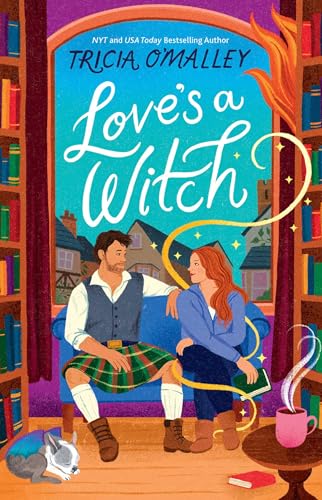
Love’s a Witch, by Tricia O’Malley. Sloane MacGregor’s whole family is hexed, and when they return to their hometown of Briarhaven to try to remove the curse, they end up bringing winter snows to their small Scottish village. In October. Town mayor Knox Davis, the grumpy but dedicated younger son of the local lord, is Not Happy that the MacGregors are back, wreaking havoc on his idyllic little town. But somehow, he can’t seem to stay away from her…
Death and the Dancing Footman, by Ngaio Marsh. A guest is murdered at a snowed-in house party. Fortunately for the other guests, Chief Inspector Roderick Alleyne is staying nearby. Ngaio Marsh was one of the queens of Golden-Age British crime writing, along with Christie, Sayers, Tey, and Allingham, and it shows in her plotting, her attention to detail, and in her eccentric but believable characters.















Katherine
I’m starting Death and the Dancing Footman in the next couple of days. I’m sure I’ve read it before but don’t remember it. I’m glad to see it’s a snowy setting! I’ve got The Enchanted Greenhouse coming up in January and am so looking forward to it. Mercedes Lackey is an author I need to read more from. Great list!
Nicole @ BookWyrmKnits
Great list! I really like Lackey’s 500 Kingdoms series, even with the flaws some of the books have. They’re still just a bunch of fun.
Nicole @ BookWyrmKnits recently posted…Mini Reviews: Chaos Choreography, The Hunting of the Snark, & The Summer Book